Colors
Shih Tzu Colors
Every color is allowed in the Shih Tzu, and many puppies change as they grow. Here is what each one is.
Shih Tzu colors cover a wider range than most people expect. Black, white, gold, brown, gray and brindle all occur, either solid or broken up with white, and a coat that looks one way at 8 weeks can look different at a year old.
This page is a guide to what each color looks like, how pigment works, and what changes as a puppy grows. Each color has its own page with more detail, and every one is linked below.
The Shih Tzu Colors
Black Shih Tzus
Solid black, black with white touches
Black and White Shih Tzus
Black patches on white, or white on black
White Shih Tzus
All white, black pigment
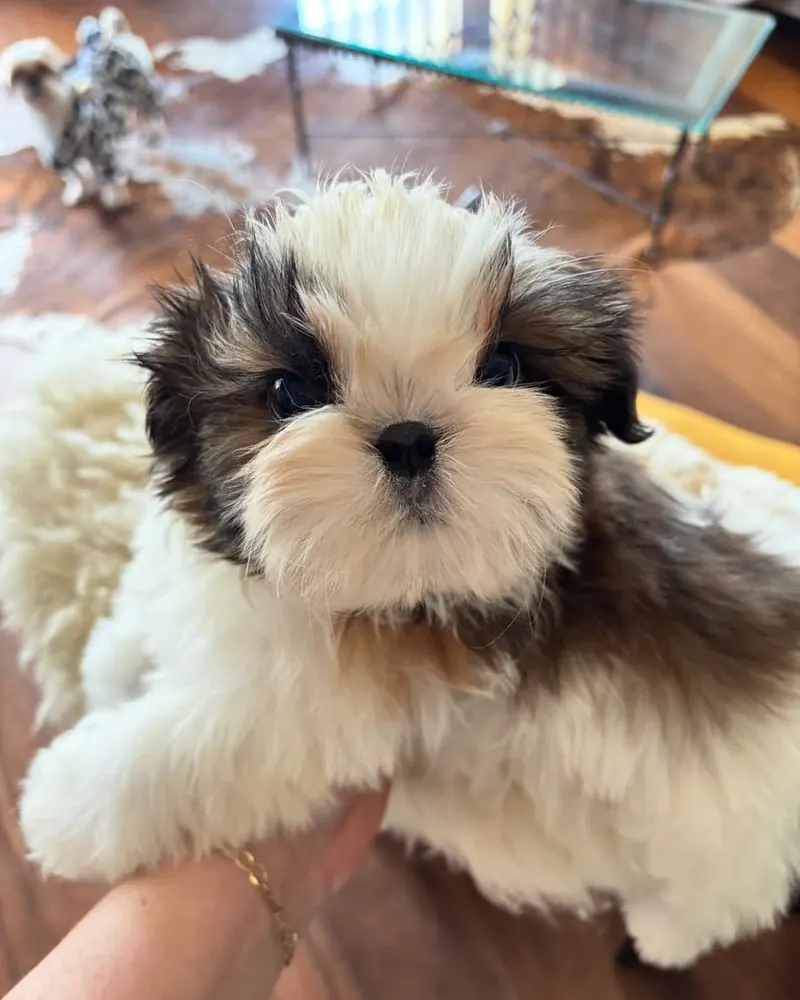
Brown Shih Tzus
3 puppies available now
Gold Shih Tzus
3 puppies available now
Gray Shih Tzus
Gray and silver
Brindle Shih Tzus
Dark and light striping
What Colors Do Shih Tzus Come In?
The main shades are black, white, gold, brown (often named liver or chocolate), gray and brindle. Each can be solid or combined with white, and some dogs carry more than one shade at once, such as black, gold and white together.
Here is a quick shih tzu color chart, with a page for each:
| Color | What it looks like | Read more |
|---|---|---|
| Black | Solid dark coat, sometimes with a white tail tip or chest patch | Black Shih Tzus |
| Black and white | Dark patches on a white coat, or white markings on black | Black and white Shih Tzus |
| White | Pale coat with dark nose, lips and eye rims | White Shih Tzus |
| Brown | Liver or chocolate, with a brown nose | Brown Shih Tzus |
| Gold | Warm yellow to deep gold, often with white | Gold Shih Tzus |
| Gray | Silver to slate, often with white | Gray Shih Tzus |
| Brindle | Dark stripes over a lighter base | Brindle Shih Tzus |
Does the Breed Standard Prefer One Color?
No. The AKC breed standard for the Shih Tzu says of color and markings that all are permissible and to be considered equally. A black dog, a gold and white dog and a liver dog are judged on the same things: structure, coat, expression and movement.
That is worth remembering when you read about a "best" color. The standard does not rank them, and nothing in it says one shade is better, healthier or more correct than another.
What Do Liver and Blue Mean on a Shih Tzu?
Liver and blue describe pigment, which is the color of the nose, lips and eye rims. On most Shih Tzus those are black. The standard says nose, lips and eye rims are black on all colors, except liver on liver pigmented dogs and blue on blue pigmented dogs. It also says the eyes are very dark, but lighter on liver and blue pigmented dogs.
Pink on the nose, lips or eye rims is listed as a fault. So the pigment is part of the picture alongside the coat, not just a detail. You can read more about the brown family on the liver and chocolate Shih Tzu page.
What Is a Parti or Particolor Shih Tzu?
A parti Shih Tzu is a dog with patches of color on a white coat, rather than one solid shade. The patches might be black, gold, liver, gray or brindle. Where the white falls varies from dog to dog: some have a white blaze up the face, a white chest, white feet or a white tail tip, and some are mostly white with a few patches.
Many people look for a black and white Shih Tzu for exactly this reason, because the contrast is striking and no two dogs have the same pattern.
Do Shih Tzu Colors Change as They Grow?
Sometimes, yes. Some puppies lighten or shift as the adult coat comes in, and any change tends to settle around the first birthday, although small shifts can carry on after that. Gold and brindle puppies in particular can look different at a year old than they did at 8 weeks, and dark coats can soften a little.
For that reason, a photo of a puppy is a guide to the colors it has now, not a promise of how it will look as an adult. If you are choosing for color, read the page for that color and think about the grown dog. Our grooming guide explains how coat care affects how a color looks.
Are There Rare Shih Tzu Colors?
Some shades are seen less often than others, and the less common ones are sometimes called rare. Rare simply means less common, and it says nothing about quality, health or how a dog will behave.
Coat color does not decide size. The adults here are about 8 pounds fully grown, a little under the 9 to 16 pound breed standard, whatever their coat. Our Shih Tzu size guide goes through weights in full.
If you would like to see which puppies are here now, the available puppies page shows every one with a profile.
Shih Tzu Color Questions
01What is the most common Shih Tzu color?
There is no official ranking. Black and white, gold and white, and solid black are the shades most people picture, and many Shih Tzus carry white somewhere, even when another color dominates.
02Is a liver Shih Tzu the same as a chocolate Shih Tzu?
Yes, in everyday use. Liver is the term used in the breed standard, and chocolate is the name many families use for the same brown shade. The nose, lips and eye rims are brown rather than black.
03Can a Shih Tzu change color?
Sometimes. Some puppies lighten or shift as the adult coat grows in, usually settling by about a year old. A puppy's color at 8 weeks is not always its color as an adult.
04Does color affect temperament?
There is no reliable evidence that it does. A Shih Tzu's personality comes from the individual dog, how it is raised and how it is handled, not from its coat.
05Does the price change with color?
Each puppy is listed with its own details on the available puppies page, and the price page explains what a puppy costs and what is included.
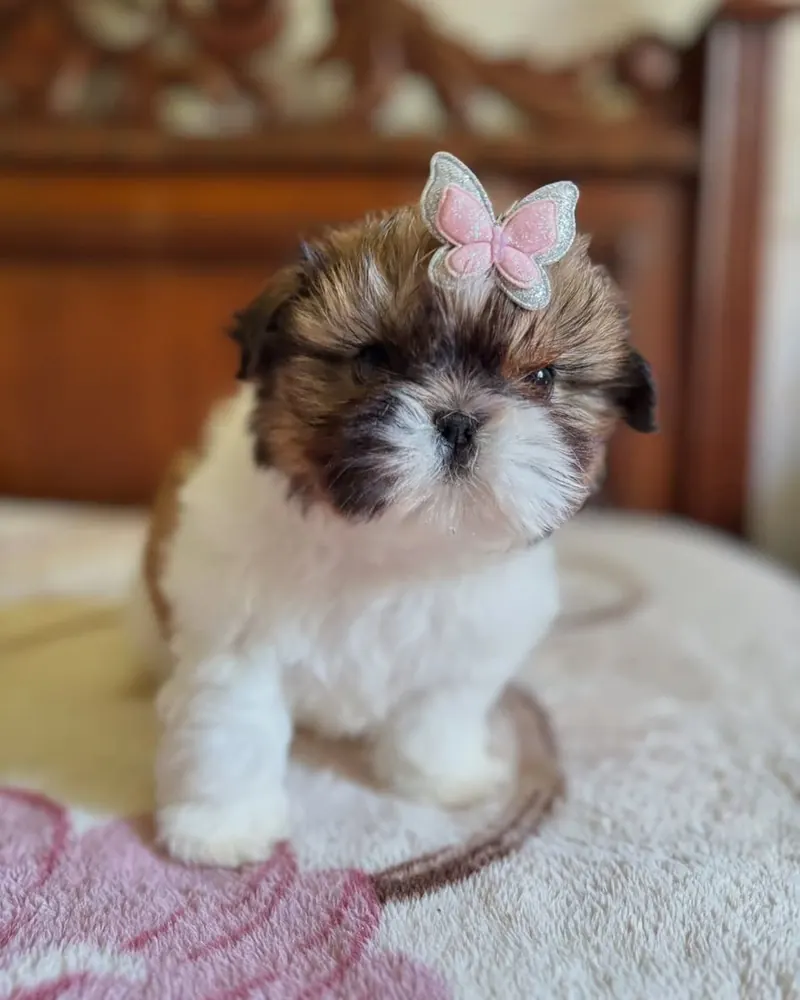
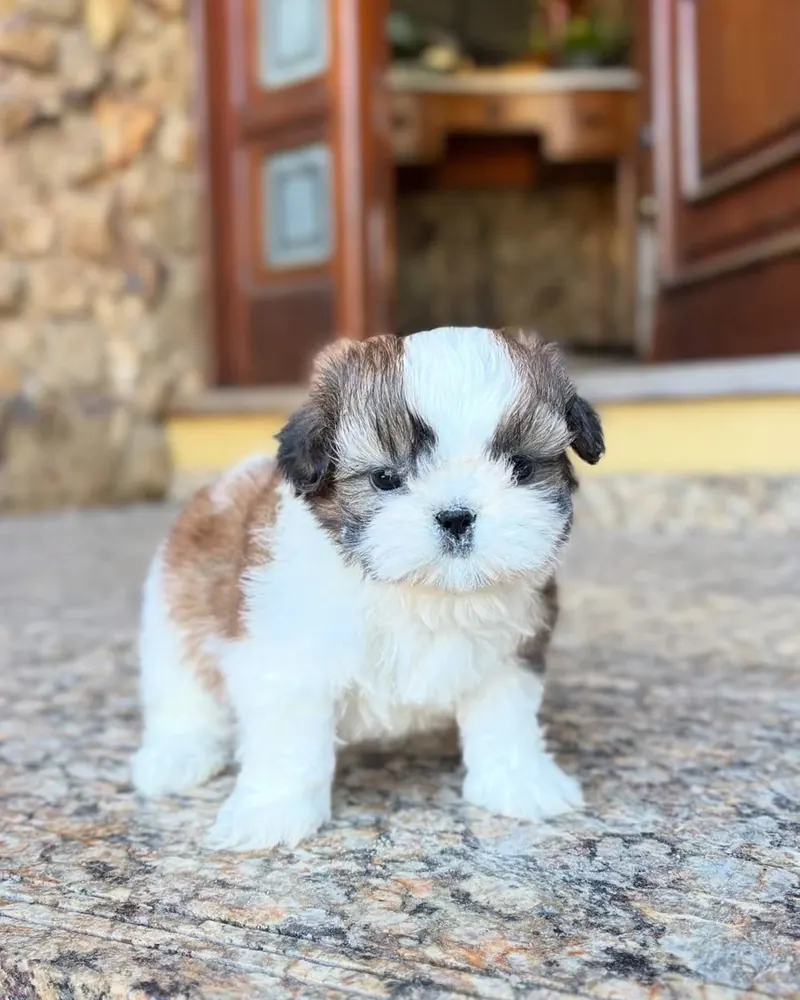
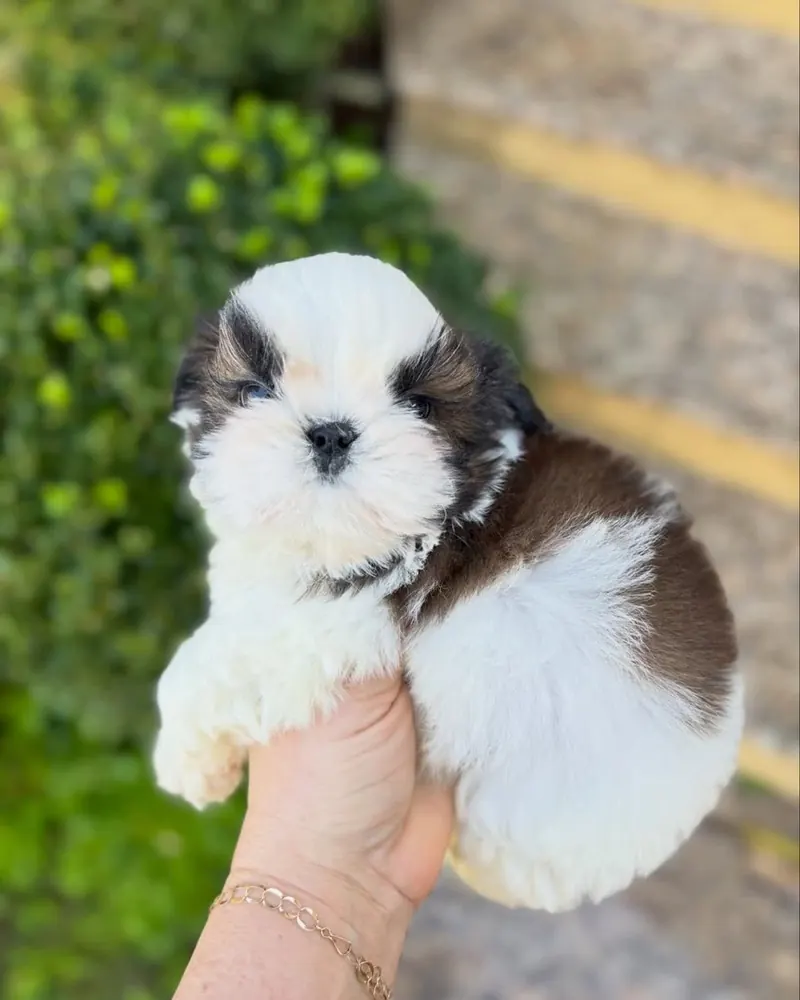
Shih Tzu Puppies Available Now
When You Are Ready
Have a Color in Mind?
Tell me the color, boy or girl, and when you would like a puppy, and I will tell you what I have.