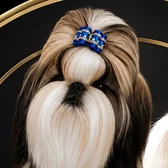
Gray Shih Tzu
What the color is, how it changes as a puppy grows, and what it means for you.
Gray is one of the softer Shih Tzu looks, with coats from pale silver to dark slate, either solid or mixed with white. Families use many names for it, including silver and gray and white, and they all point to the same family of shades.
Here is what a gray Shih Tzu looks like, what blue pigment means in the breed standard, and what to expect as a puppy grows. We also cover care and how gray compares with the other colors.
Looking for a Puppy? See the Other Colors
There are no gray Shih Tzu puppies available right now. The brown and gold puppies are ready to go home, or tell me what you are hoping for.
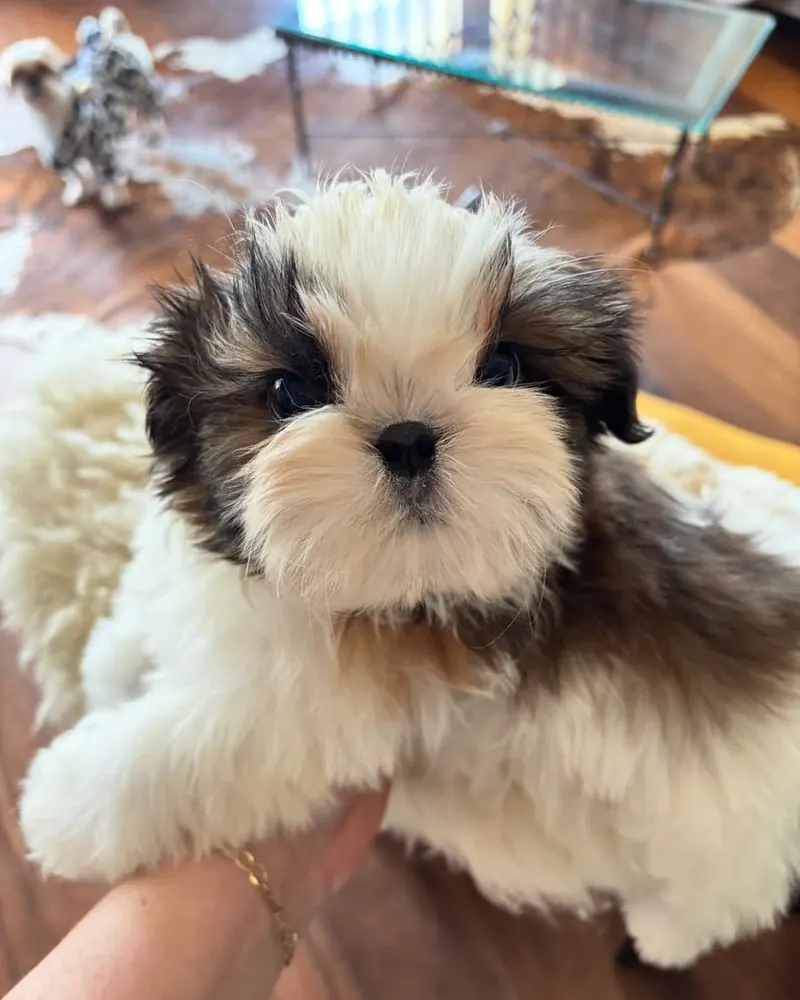
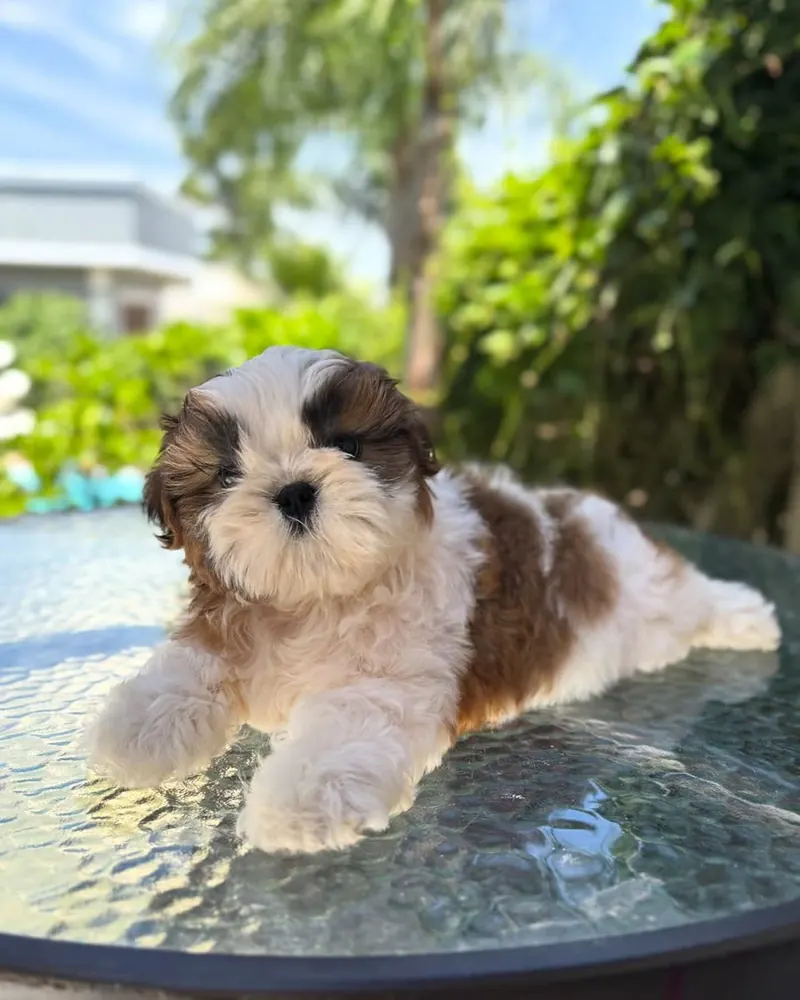
What Does a Gray Shih Tzu Look Like?
A gray Shih Tzu has a coat that reads as silver, steel or slate, depending on the light. Some are solid, and many are gray and white, with white on the face, chest, feet and tail tip.
Gray is not always a single flat shade, and it can look warmer or cooler depending on the light, so look at more than one photo.
Gray and white Shih Tzus are one of the most photographed shades because the soft tones look good against a pale background. The white blaze and chest give the dog an open, bright face.
The gray itself can look different over time. A pale silver puppy may darken and a dark puppy may lighten, while the white markings generally stay where they are.
Is a Silver Shih Tzu the Same as a Gray One?
People use the words loosely. Silver generally means a lighter, brighter gray, while gray can include darker slate shades. A silver and white Shih Tzu is simply a pale gray dog with white markings.
If a particular shade matters to you, look at several photos in daylight, because gray looks warmer or cooler depending on the light and the camera.
Breeders and families also use words like pewter, steel, ash and charcoal. None of these is an official color name in the breed standard, which simply says that all colors are permissible, so use the photos and ask questions when a word is unclear.
What Is Blue Pigment on a Shih Tzu?
The AKC standard mentions blue pigmented dogs. For those dogs, the nose, lips and eye rims are blue rather than black, and the eyes are lighter than the very dark eyes of other colors. That refers to pigment in the skin, not to a bright blue coat. A dog with blue pigment may look slate or gray in the nose and eye rims.
Not every gray coat comes with blue pigment, and a gray dog with a black nose is perfectly usual. The pigment is a separate point from the coat shade.
Do Gray Shih Tzu Puppies Change Color?
They can. A puppy may look darker or lighter at 8 weeks than it will at a year, and the gray can shift toward silver or deepen as the adult coat grows in. Any change is usually done by the first birthday, though small shifts can continue.
Because of that, a puppy photo shows today's coat, not a guarantee of the adult. If gray is what you want, picture the dog at a year and ask for recent photos.
How Do You Care for a Gray Coat?
The same way as any Shih Tzu: brush to the skin every day, bathe regularly and keep the face clean. Gray hides some dirt and shows little staining, but a long coat still tangles quickly behind the ears and under the legs.
A puppy cut keeps things easy to manage. See the grooming guide for a full routine and the haircuts page for styles.
Does Gray Say Anything About Health or Temperament?
There is no reliable evidence that gray affects temperament, and no well-established link between a gray coat and health. Gray Shih Tzus are as affectionate and as stubborn as any other.
Royal Silk Shih Tzus raises puppies at home, and every one is seen by the vet before it goes home. The available puppies page shows who is here now, and the colors page shows the rest of the range.
Regular vet visits, good food and daily grooming matter far more than the shade of the coat.
How Does Gray Compare With Other Colors?
Gray sits between black and white, and many gray dogs look closer to one or the other depending on their markings. A dark gray with little white looks similar to a black Shih Tzu, while a pale silver with plenty of white looks closer to a white Shih Tzu.
The easiest way to see the difference is side by side in natural light. Photos on a screen can change gray to blue or brown, so ask for more than one picture.
Gray Shih Tzu Questions
01Are gray Shih Tzus real?
Yes. The AKC standard allows all colors and markings, and gray, silver and gray and white all occur.
02Why is my Shih Tzu puppy turning gray?
Some puppies shift in color as the adult coat grows in, and darker coats can soften a little. Any change is usually done by about a year.
03What is a blue Shih Tzu?
A dog with blue pigment on the nose, lips and eye rims, as the AKC standard describes, and lighter eyes. It refers to pigment, not to a bright blue coat.
04Is a gray and white Shih Tzu the same as a silver one?
Close. Silver tends to mean a lighter gray, and gray and white describes the pattern. They are on the same page.
05Do gray puppies cost more?
The price page explains what a puppy costs and what is included, and each puppy has its own card.
The Other Shih Tzu Colors
Hoping for a Gray Shih Tzu?
Tell me what you are looking for, and ask about the puppies available now.