
Shih Tzu Guide
Lhasa Apso vs Shih Tzu
Put a Lhasa Apso and a Shih Tzu in the same room and plenty of people could not say which is which. Both are small, long-coated dogs with Tibetan roots, and the two breeds were even mixed up in their early days in the West. They are not the same dog, though, and the differences matter if you are choosing between them.
This is a fair comparison of the Lhasa Apso vs the Shih Tzu: how they look, how they behave at home, how much coat care they need and what health issues come with each. Both are fine breeds, and the right one depends on your household. If you lean toward the Shih Tzu, the guide to the breed is a good place to start.
What is the difference between a Lhasa Apso and a Shih Tzu?
The quick answer is that the Lhasa Apso is a little taller, a little heavier and more reserved, with a longer muzzle and a straighter, heavier coat. The Shih Tzu is a bit smaller, with a short, flat face, large round eyes and a softer, often wavier coat, and a reputation for being outgoing with everybody.
| Lhasa Apso | Shih Tzu | |
|---|---|---|
| Weight (AKC) | 12 to 18 pounds | 9 to 16 pounds |
| Height | About 10 to 11 inches | About 9 to 10.5 inches |
| Face | Longer muzzle | Short, broad, flat face |
| Coat | Heavy, straight, hard | Dense, silky, may have a slight wave |
| Temperament | Alert, independent, wary of strangers | Friendly, outgoing, affectionate |
Individual dogs vary, and these are breed averages and standards, not promises about any one puppy.
Which is bigger, a Lhasa Apso or a Shih Tzu?
The Lhasa Apso, by a small margin. The AKC lists the Lhasa at about 12 to 18 pounds and 10 to 11 inches, and the Shih Tzu at 9 to 16 pounds and an ideal height of 9 to 10.5 inches. The overlap is large, so a big Shih Tzu can outweigh a small Lhasa.
The shape is different too. A Lhasa is a little longer in the body than it is tall, with a more rugged build. A Shih Tzu is sturdy and compact. If size matters to you, the Shih Tzu size guide covers the range, and the adults here are about 8 pounds fully grown, which is a little under the breed standard.
How do their faces and coats compare?
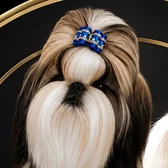
Faces are the easiest tell. The Shih Tzu has a short muzzle, wide-set large dark eyes and an upturned, pushed-in look. The Lhasa has a more pronounced muzzle. That makes a difference to breathing and eyes, as covered below.
Both have a long double coat, but the feel is not the same. The Lhasa standard asks for a heavy, straight, hard top coat, while the Shih Tzu coat is dense and softer, with a slight wave allowed. Both need regular brushing, and either can be clipped short. The Shih Tzu is available in a wider range of colors, as the Shih Tzu colors page shows, while the Lhasa is most often seen in gold, honey, cream, gray and black shades.
Which breed has the better temperament?
Neither is better. They are different, and the right pick depends on what you want at home.
- Shih Tzu: bred as a companion, and it shows. Most are friendly with visitors, content to follow you from room to room and happy on a lap. Some are stubborn, and many bark at the doorbell but rarely much beyond that.
- Lhasa Apso: traditionally a watchful house guardian in Tibetan homes, so it tends to be more aloof with strangers, more independent and more likely to sound the alarm. Early socialization matters a lot.
Both can be stubborn and both like their people. The Shih Tzu temperament guide goes into detail on what living with one is like.
Which needs more grooming?
Both need real commitment. A full coat on either breed mats if it is not brushed several times a week, and both need regular baths and trims around the eyes, feet and rear. Many owners choose a shorter clip to make it simple, and a professional visit every few weeks is common for either breed. Costs vary by area and coat, so ask local groomers for an estimate.
The Shih Tzu has the extra job of keeping the face clean, since the folds and tear ducts collect moisture. The Lhasa has less facial fuss but a heavier coat that can be harder to comb through. For clips and care, see the Shih Tzu grooming guide and the Shih Tzu haircuts guide.
Which breed is healthier?
Both have conditions to watch, and neither is a clear winner. Because of its flat face, the Shih Tzu has a higher chance of breathing trouble, eye injuries and dental crowding, and it is sensitive to heat. The Lhasa Apso has a longer muzzle, so airway problems are less typical, though it can get eye problems, skin conditions and kidney trouble. Both breeds can suffer from slipping kneecaps.
Individual health depends on the dog, so ask any breeder what a vet has checked. For the Shih Tzu, the health problems guide lists what to look for, and the lifespan guide covers how long the breed lives.
How does the Shih Tzu compare with a Havanese or a Pekingese?
Two other small breeds are often weighed up alongside these two.
- Havanese: a Cuban breed, similar in size to a Shih Tzu, with a longer muzzle, a soft wavy coat and a lively, bouncy nature. It is not a flat-faced breed, so breathing is less of a worry.
- Pekingese: a Chinese imperial breed with a very flat face, a bold, dignified personality, and a profuse coat. It is more independent than a Shih Tzu and more sensitive to heat.
The Shih Tzu sits between them: sociable like the Havanese, a Chinese lion dog like the Pekingese, and many people find it the easiest of the three to live with because it asks only for company.
Which is easier to live with day to day?
For exercise and training the two are close. Both are happy with a couple of short walks and play indoors, and neither needs a run. Both are clever and a little stubborn, so training works best in short, cheerful sessions with small treats, and harsh handling backfires with either one.
With children and other pets, the Shih Tzu has the easier reputation, since it is usually friendly with everyone it meets. A Lhasa can be a good family dog too, but it often wants to decide who is welcome, so careful introductions and early socialization pay off. Either breed is easy to hurt at puppy size, so young children need to be shown how to hold and carry a small dog.
Neither is a good choice for someone who is out all day, because both were bred to live alongside people. Barking is about the same: a Lhasa alerts to sounds as part of its watchdog past, and a Shih Tzu often joins in at the doorbell.
How do I choose between them?
Think about your home, not the photos. If you want a dog that greets everyone, rides along happily and lives for lap time, the Shih Tzu is a natural fit. If you prefer a watchful, independent dog and do not mind a more reserved personality, the Lhasa Apso may suit you better. If you cannot manage brushing and clipping, neither is a low-effort choice.
I breed Shih Tzus only, so I can speak for those. To see which dogs are looking for homes, visit the available puppies page, or read the Shih Tzu price page for what a puppy costs and includes.
Quick Answers
01Is a Lhasa Apso the same as a Shih Tzu?
No. They are separate breeds with a shared Tibetan background. The Lhasa is a little bigger with a longer muzzle and a harder coat, and the Shih Tzu has a flatter face and a softer coat.
02Can a Shih Tzu and a Lhasa Apso live together?
Often, yes. Both are small and adaptable. Introduce them gradually and give each its own food, bed and attention.
03Do Shih Tzus and Lhasa Apsos shed?
Both shed very little compared with many breeds, but loose hair stays in the coat and mats if it is not brushed out.
04Is a male or female Shih Tzu better?
Neither sex is better. Personality varies more between individual dogs than between the sexes, so meet the puppy rather than choosing by sex alone.
05Which is easier to train, a Lhasa Apso or a Shih Tzu?
Both are intelligent and a bit stubborn. Short, upbeat sessions with treats work for either, and the Shih Tzu is often keener to please.
Shih Tzu Puppies Available Now


Keep Reading
What Is a Shih Tzu?What a Shih Tzu is: where the breed comes from, what the name means, how to pronounce it, what it was bred for and what...Read the guide
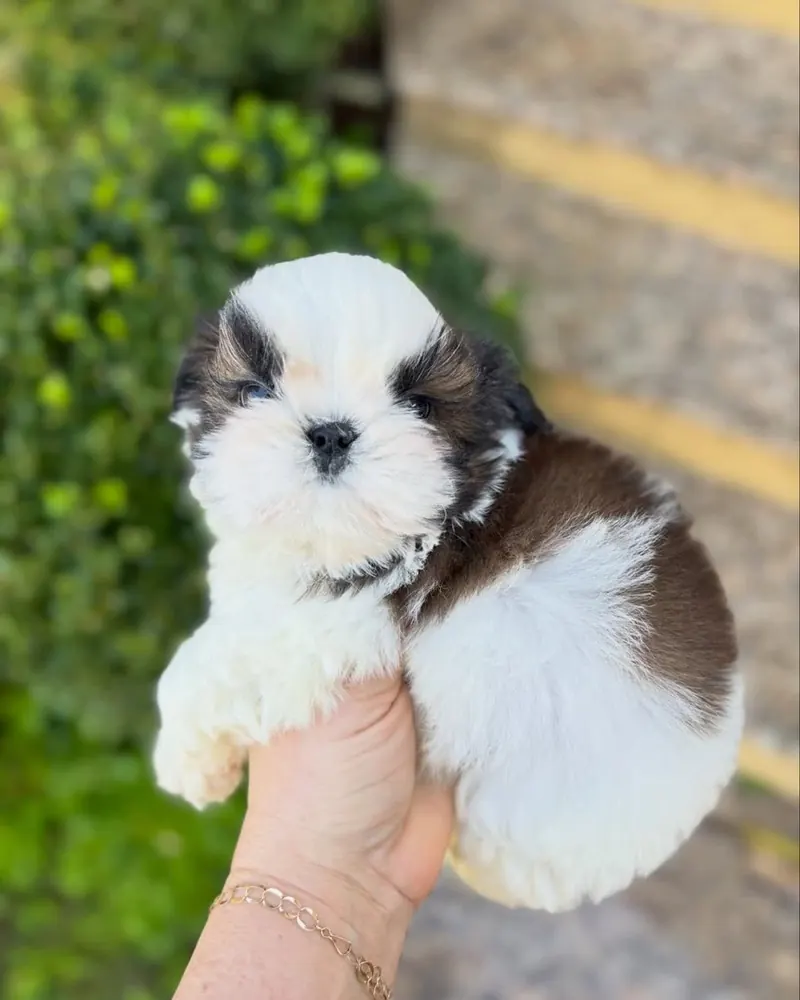 Shih Tzu Temperament: What Living With One Is Really LikeWhat is a Shih Tzu's temperament like? Affectionate, playful and a little stubborn: personality, barking, intelligence,...Read the guide
Shih Tzu Grooming: The Routine That Keeps the Coat HealthyHow to groom a Shih Tzu at home: brushing, mats, baths, eyes, ears, nails, teeth, the top knot, supplies and how often to...Read the guide
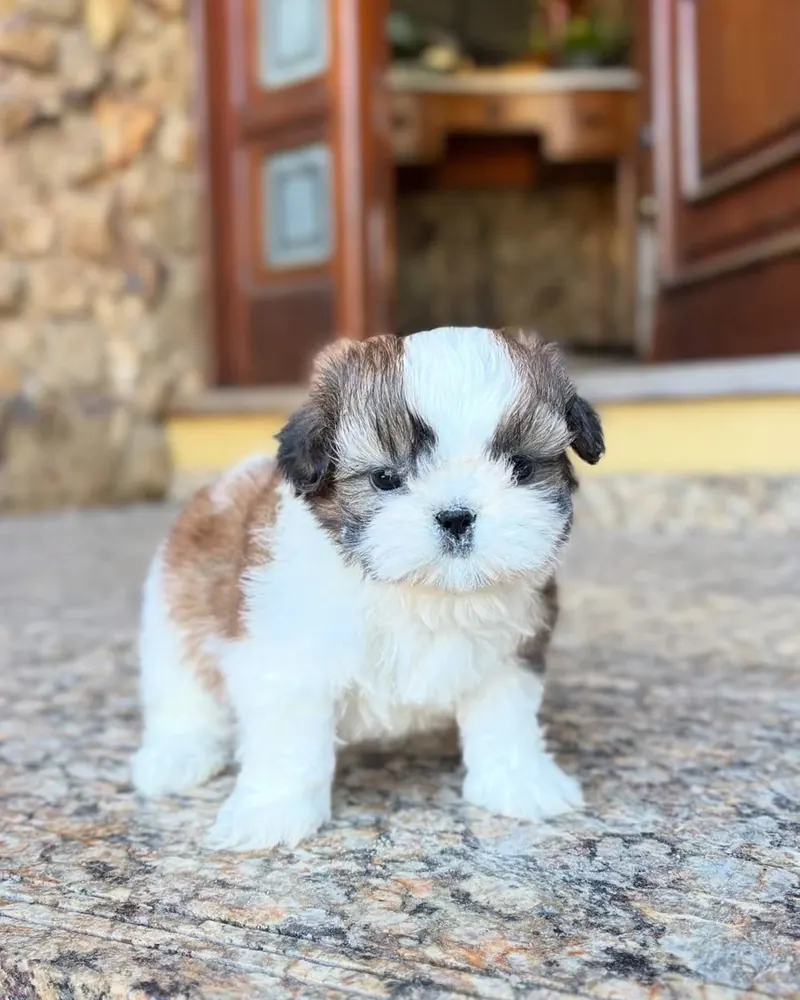 How Big Do Shih Tzus Get?Size, weight and growth by ageLearn more
Shih Tzu Health ProblemsThe common Shih Tzu health problems, from eye trouble and breathing to teeth, ears, skin and knees, plus what a vet...Read the guide
 Shih Tzu NamesShih Tzu names for boys and girls, from Chinese and Tibetan ideas to coat colors, food, royalty and size, plus how to...Read the guide
When You Are Ready
Thinking About a Shih Tzu Puppy?
See the puppies available now, or ask me anything about the breed.